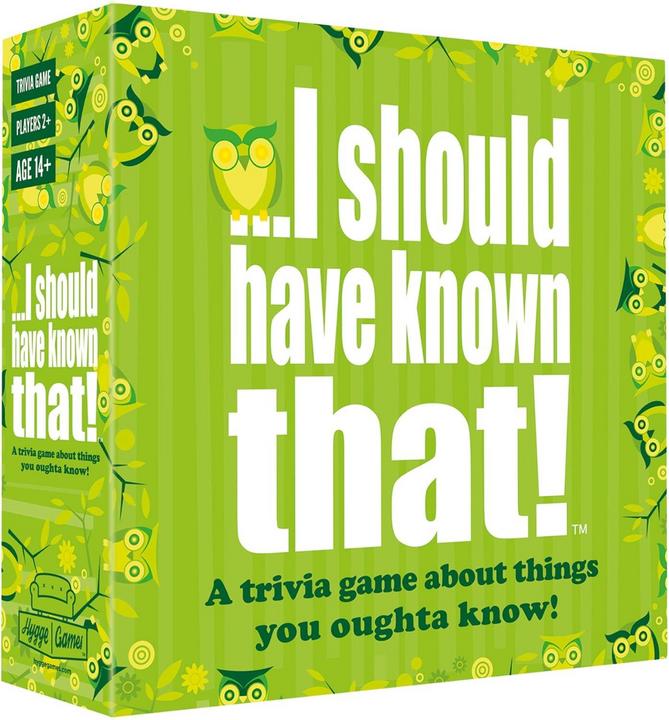
I Should Have Known is a compact green trivia card game with 110 cards and more than 400 questions.
The game removes points for wrong answers, creating a fast-paced, laugh-filled challenge that keeps family and friends guessing.
Easy to learn, portable, and ideal for parties or casual game nights, it’s a fun, quick addition to any collection.

I Should Have Known: What’s in the Box and Why It Matters
The compact card set focuses on quick, social trivia — knowing the card count, question variety, and the scoring twist tells you how it will perform at parties and family nights.
- I Should Have Known — compact green box that includes 110 cards with over 400 questions in total.
- Question variety — 400+ questions across general knowledge and pop topics to keep rounds fresh and replayable.
- Scoring twist — wrong answers subtract points, which speeds play and raises the stakes for guessing.
- Play style & pacing — designed for short, fast rounds that favor quick thinking and group banter rather than long strategy sessions.
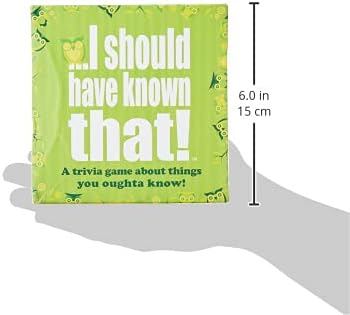
- Portability — small, lightweight box makes it easy to take to parties, trips, or casual gatherings.
- Components & durability — standard cardstock cards in a snug tuck box for everyday use and transport.
- Learnability & suitability — very simple rules make it easy for mixed-age groups and new players to join immediately.
Why this matters: these specs explain the game’s real value — plenty of replayable content, a compact form factor for travel, and a scoring mechanic that keeps sessions lively and quick, making it a reliable choice for parties, family game nights, or short social breaks.

Pros
-
The compact tuck box holds 110 cards and more than 400 questions, giving surprisingly broad replay value in a pocket-sized package that’s easy to bring to parties, trips, or casual gatherings without taking up space.
-
The scoring twist—wrong answers subtract points—keeps rounds fast and tense, shortening session time and creating lively competition that rewards careful guessing and sparks more energetic group banter.
-
Simple, intuitive rules let new players jump in immediately, making the game ideal for families and mixed-age groups who want quick, low-friction play without long setup or rule explanations.
-
Question variety spans general knowledge and pop topics, which helps keep sessions fresh across multiple plays and appeals to different interests within a diverse group.
-
Minimal components—just cards in a tuck box—mean fast cleanup and fewer pieces to lose, so you can start playing in seconds and pack the game away easily after a round.
Cons
-
The tuck box and standard cardstock feel basic and may show wear with heavy use; frequent shuffling and travel can cause corner damage or bent cards, so you might want to sleeve or replace cards for regular play.
-
Even with 400+ questions, heavy players may encounter repetition or feel the content becomes familiar over time, and the set lacks official expansion packs to extend long-term replayability.
-
The negative-scoring mechanic can frustrate casual or younger players by discouraging guessing and creating tense moments, which may make the game less welcoming for relaxed family sessions.
-
The game includes only cards and a tuck box with no accessories, timers, or alternate modes, so groups wanting varied formats or tracking tools must supply their own extras and house rules.
My Personal Impressions
I grabbed I Should Have Known That! for family night and it was an instant hit — quick rounds, laugh-out-loud moments, and surprisingly educational. We enjoyed recalling things we’d forgotten and the game stayed fast-paced. It’s easy to learn and worked well with mixed-age groups.
What surprised me was the variety — history, pop culture, science — enough to keep trivia buffs interested. The cards feel sturdy and the box is compact. There are multiple ways to play, which kept things fresh. I even used it with students; they loved the mix of easy and tougher questions.
Not everything was perfect — a handful of questions felt oddly phrased or too obscure, and one player complained some prompts couldn’t be easily answered. It leans toward teens and adults, not ideal for very young kids. Still, the challenge was part of the fun and sparked great conversations.
Overall I’d recommend I Should Have Known That! for game nights and classrooms — it’s good value with lots of cards and replayability. Expect occasional unfair questions, but the friendly competition, learning moments, and different play modes outweigh that. Great pick if you want a fast, brainy party game.
Getting the Most from I Should Have Known
This section offers practical, real-world advice for using the compact trivia set and shows who will benefit most from its format and content.
Practical Tips for Play
Use a short timer to keep rounds brisk—set a kitchen timer or phone to 30 seconds per turn to preserve the game’s quick pace and maintain energy. The timer also compensates for the negative-scoring mechanic by preventing long debates.
If negative scoring feels too harsh, play a softened house rule: instead of subtracting points, award a single pass token or give half points for close guesses. These adjustments keep the core challenge while making sessions friendlier for younger players.
Travel and Maintenance Tips
Protect cards for frequent travel by using thin card sleeves or placing the tuck box inside a small protective tin or zip pouch to avoid bent corners. The cardstock is standard and will show wear with heavy shuffling or being tossed into bags.
Replace or photocopy worn cards if specific questions are getting smudged, and store the set upright in a bag compartment to keep the tuck box from crushing. A quick inventory after trips prevents missing cards from breaking up future games.
How It Compares to Other Party Trivia Games
The set’s 110 cards and 400+ questions make it smaller than large boxed trivia games but far more portable than app-based trivia. Its main difference is the negative-scoring twist, which speeds rounds compared with free-guess formats like many party apps.
Compared to expansion-friendly games, this box has no official expansions included, so its replayability depends on group variety and house-rule creativity rather than ongoing content drops. If you want endless new content, an app or expandable system may suit you better.
Who This Game Actually Fits
This game suits families with teens (10+), casual party hosts who need a compact icebreaker, and travel gamers who value space-saving components. It’s best for groups that enjoy fast, competitive rounds rather than long strategy sessions.
Avoid this if you need a cooperative or learning-focused classroom tool, or if your group dislikes score penalties; the negative-scoring mechanic changes tone and may not fit very young children or low-pressure family play.
Everyday Use Cases
Bring it to a weekend getaway or road trip for quick 15–30 minute sessions between activities; the small tuck box fits easily in a backpack or carry-on. It also works well as a warm-up at parties to break the ice and get guests laughing in minutes.
Use a handful of cards as a daily desk break with coworkers or as an after-dinner family challenge to wind down the evening. The short session length and compact storage make casual, repeated use practical and low-effort.
I Should Have Known: Frequently Asked Questions
How many players can play and what age is it best for?
The game works well with small to medium groups (2 or more players) and is best for teens and adults; we recommend ages 10+ because questions assume basic general-knowledge and pop-culture awareness.
How long does a typical session take?
Rounds are short and fast-paced—expect 15–30 minutes per session depending on player count and how many rounds you play, which makes it ideal for party breaks or quick family game nights.
How many questions are included and will they repeat?
The set contains 110 cards with more than 400 total questions, offering good initial variety; however heavy players may notice repetition over many plays since there are no official expansions in the box.
What is the scoring like and how does it affect gameplay?
The scoring twist subtracts points for wrong answers, which speeds play and raises stakes; it encourages careful guessing but can frustrate younger or very casual players who prefer risk-free play.
Are the components durable and travel-friendly?
Cards use standard cardstock in a small tuck box, so the game is very portable but the box and corners can show wear with heavy use—consider card sleeves or storing the set in a protective tin for frequent travel.
Does the game include extras like a timer, app, or expansions?
No extras are included—there’s no timer, app, or official expansion pack in the box, so groups wanting varied formats should bring a timer or invent house rules to extend replayability.

Conclusion: Is I Should Have Known Worth Buying?
If you want a short, portable trivia game that creates fast rounds and lively group interaction, this set is worth considering.
I Should Have Known includes 110 cards with more than 400 questions, uses a negative-scoring mechanic that subtracts points for wrong answers, and comes in a compact tuck box that’s easy to take to parties or trips.
For quick party rounds or casual family game nights, this game delivers straightforward, travel-friendly trivia fun.